Most students don’t struggle because they’re lazy. They struggle because a 30-kid classroom can’t slow down for one confused student, and by the time a parent spots the gap, it’s weeks old. AI tutoring tools are stepping into that gap, and in 2026, they’re doing it in ways that look less like search engines and more like actual one-on-one instruction. Here’s what’s really happening inside classrooms and kitchens where these tools are being used, and where the limits are.
What “AI Tutor” Actually Means Now
The phrase gets used loosely, so let’s be specific. Three distinct product types share the label:
Passive AI tools answer questions when prompted. Think of them as smarter search bars. You paste in a math problem, you get a solution with steps. The student controls all the pacing, and the AI responds only when asked.
Adaptive practice platforms use algorithms to adjust difficulty based on what a student gets right or wrong. Khan Academy’s Khanmigo, IXL, and similar tools fall here. They track performance over sessions and shift the question bank accordingly. They’re not truly conversational, but they do personalize the content stream.
Agentic AI tutors are the newest and most debated category. These tools carry memory across sessions, ask follow-up questions without prompting, identify patterns in a student’s errors, and generate new problems tailored to the exact misconception they’ve spotted. In early 2026, tools like Synthesis Tutor and upgraded versions of Khanmigo have pushed furthest in this direction.
The important distinction: passive tools react, adaptive tools adjust, agentic tools plan.
How Personalized Learning Actually Works Inside These Systems
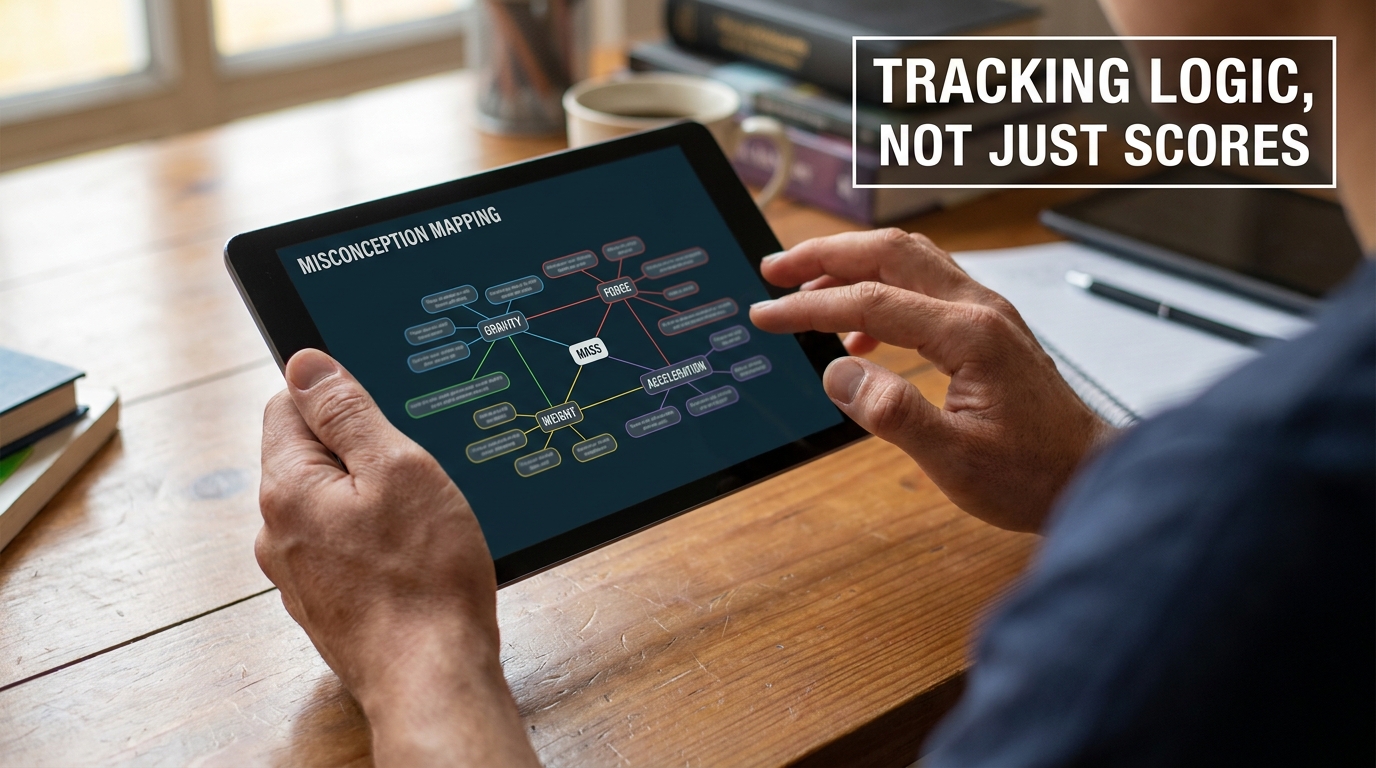
Most parents picture personalization as “easier problems for struggling kids.” That’s one layer. The more interesting layer is misconception mapping.
When a student consistently adds fractions by adding numerators and denominators separately (a very common mistake), a well-designed agentic tutor doesn’t just mark it wrong and move on. It flags a conceptual gap, queues targeted problems on the concept of “what a denominator represents,” and holds off on more complex fraction work until that gap closes. The system isn’t just tracking scores. It’s tracking the logic behind the errors.
One pattern I’ve seen show up across multiple tool demos and classroom reports: students who test well on procedural problems often mask conceptual gaps. A kid can memorize the steps for long division without understanding what division means. Good adaptive systems eventually surface this, usually when the problem type shifts slightly and the memorized procedure no longer applies.
| Tool Type | Personalization Depth | Remembers Past Sessions | Generates New Problems | Teacher Dashboard |
|---|---|---|---|---|
| Passive (ChatGPT, etc.) | Low | No (without setup) | Yes, if prompted | No |
| Adaptive Platform (IXL, Khan) | Medium | Yes | Limited | Yes |
| Agentic Tutor (Synthesis, Khanmigo) | High | Yes | Yes, dynamically | Yes |
What the Classroom Experience Looks Like in Practice
Schools using AI tutoring tools in 2026 largely fall into two models.
The supplement model keeps traditional instruction intact. Teachers run lessons. AI tools handle practice, homework review, and targeted re-teaching outside of class hours. Students who don’t understand the evening’s math assignment can work through it with an AI tutor before it becomes a classroom crisis the next morning. Teachers review the session data the following day.
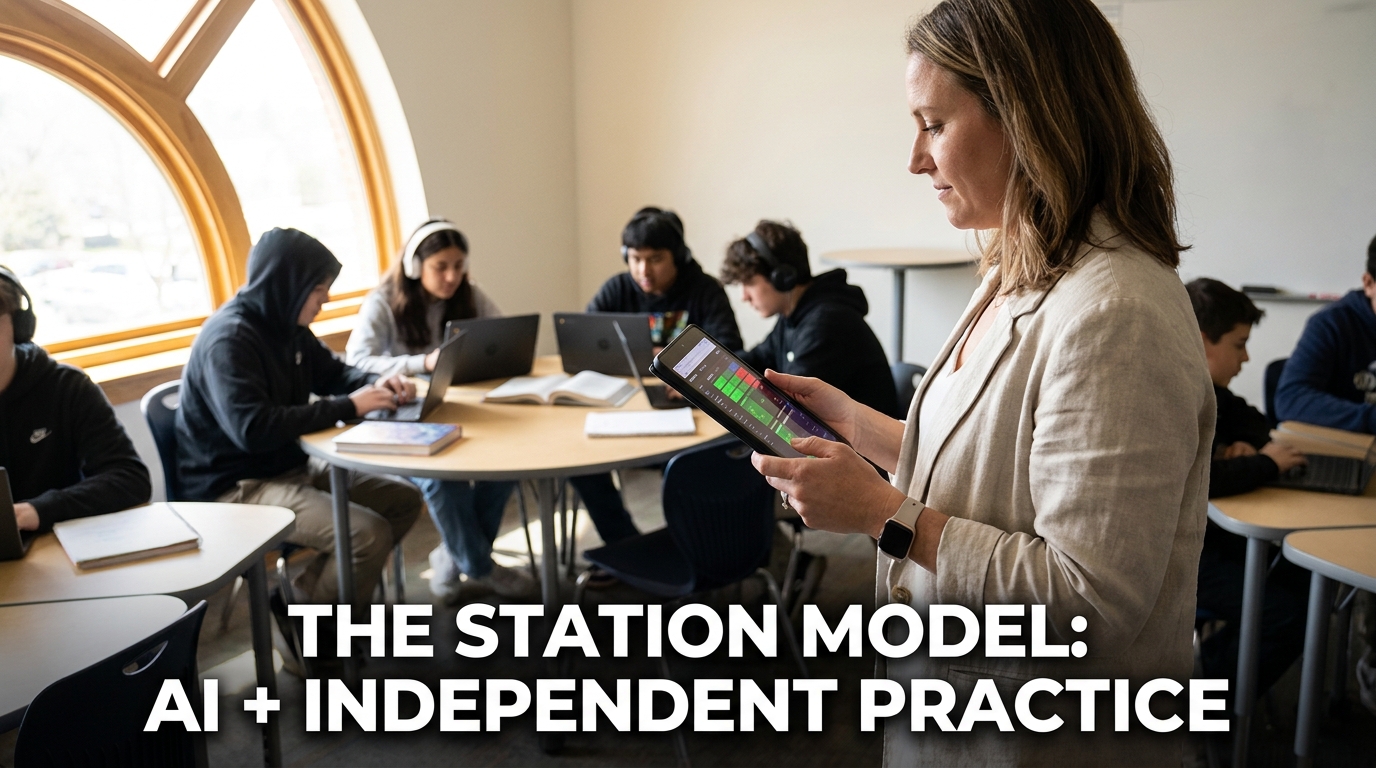
The station model integrates AI work into class time itself. Students rotate through teacher-led discussion, group work, and AI-assisted independent practice. The teacher gets live dashboards showing which students are stuck, on what, and can redirect attention accordingly. This works especially well in math, where skill gaps are sequential and easy to diagnose.
What doesn’t work: treating AI tutoring as a homework replacement without any teacher visibility. When students use tools privately with no reporting layer, teachers lose the diagnostic benefit. The value of these systems comes as much from the data they surface as from the in-session instruction they give.
The Honest Case for AI Tutors
Availability and Patience
A human tutor works one hour, costs real money, and gets tired. An AI tutor works at 11pm on a Sunday, handles the same question seventeen times without frustration, and charges a flat subscription fee. For families who can’t afford private tutoring, this is genuinely meaningful access.
Specific Feedback at Scale
Written feedback on student work has always been a teacher capacity problem. A class of 30 means each student gets maybe five minutes of individual attention per week. AI tools can give line-level feedback on a written paragraph, flag where an argument loses logic, and suggest a revision strategy, all within seconds and for every student simultaneously.
Reducing the “Ask for Help” Barrier
A number of teachers and researchers have noted that students who won’t raise their hand in class or ask a teacher for help after school will ask an AI the same question with no hesitation. The stakes feel lower. Being confused in front of a machine carries no social risk. For students who’ve built identity around “being bad at math,” that removal of social stakes matters more than it might seem.
The Honest Case for Caution
The Homework Completion Problem
AI tools can complete assignments. Students know this. The gap between “used an AI tutor to understand a concept” and “had AI do my homework while I watched” is invisible from the outside. Schools that added AI tools without rethinking assignment design saw this quickly. The assignments most vulnerable to AI completion are also the most common: problem sets with clear right answers, essay prompts with predictable structure, fill-in-the-blank reviews.
The response that actually works isn’t banning tools. It’s designing work where the process is as visible as the product: in-class discussions that require referencing homework reasoning, assignments that ask students to explain a wrong answer they initially gave, oral checkpoints tied to written work.
Shallow Understanding vs. Correct Answers
Agentic AI tutors are good at guiding students to correct answers. They are less reliable at building the frustration tolerance and problem-persistence that comes from working through difficulty without support. There’s a real concern that students who always have a scaffold available don’t develop the same ability to sit with a hard problem. This is an open pedagogical question with no clean answer yet.
Equity in Access and Quality
The best agentic tools are not free. They range from $9 to $30 per month as of early 2026, with school licensing adding another layer of cost complexity. Schools in lower-income districts often have access to older or less capable tools. The gap between what a well-funded suburban school offers through AI and what a cash-strapped urban school offers is real and growing.
| Factor | Well-Funded School | Under-Resourced School |
|---|---|---|
| AI Tool Access | Premium agentic platforms | Free/basic tools only |
| Teacher Training | Dedicated PD budget | Minimal or none |
| Device Access | 1:1 devices | Shared devices |
| Parent Literacy | High AI familiarity | Variable |
What Teachers Actually Need to Know
AI literacy for teachers in 2026 isn’t about knowing how the models work technically. It’s about three practical skills.
Reading the data dashboards. Every major platform generates reports. A teacher who doesn’t know how to interpret session data, spot false positives (a student who guessed right three times and now looks “proficient”), or cross-reference AI scores with class observations is flying partially blind.
Redesigning assignments. The assignments that survived the plagiarism era often don’t survive the AI era. Teachers who are ahead of this have shifted toward work that’s personal, process-visible, or performance-based.
Helping students self-regulate AI use. Left alone, many students default to using AI to remove difficulty rather than to understand. Explicit classroom conversation about when to ask the AI and when to struggle first is more effective than blanket policies. One teacher I read about described it as teaching students to use AI like a hint system in a game: use it after you’ve genuinely tried, not as a first move.
Free and Low-Cost Tools Worth Knowing
- Khan Academy / Khanmigo (free base, paid tutoring features): strongest for K-12 math and science, well-integrated teacher dashboards
- Quizlet AI (freemium): strong for vocabulary, concept review, and flashcard generation
- Photomath (free): step-by-step math explanation from a photo of the problem, no conversation layer but high accuracy
- ChatGPT (free tier): flexible but passive, no session memory on free plans, no teacher reporting
- Synthesis Tutor (paid): most sophisticated agentic experience for math reasoning, designed for ages 6-14
Conclusion
AI tutoring in 2026 is real, and it’s effective when used well. The classroom wins aren’t coming from replacing teachers or making homework disappear. They’re coming from giving students access to patient, specific, on-demand feedback that teachers alone can’t provide at scale, and from giving teachers better data about what students actually understand versus what they’ve simply memorized.
The tools are ahead of the training. Most teachers haven’t had meaningful preparation for how to use AI data, how to redesign assignments, or how to teach students to use these tools responsibly. That’s the gap that needs closing fastest.
What’s your experience been? If you’re a teacher or a parent who has used AI tutoring tools with students, what changed and what stayed the same? Leave a comment below.