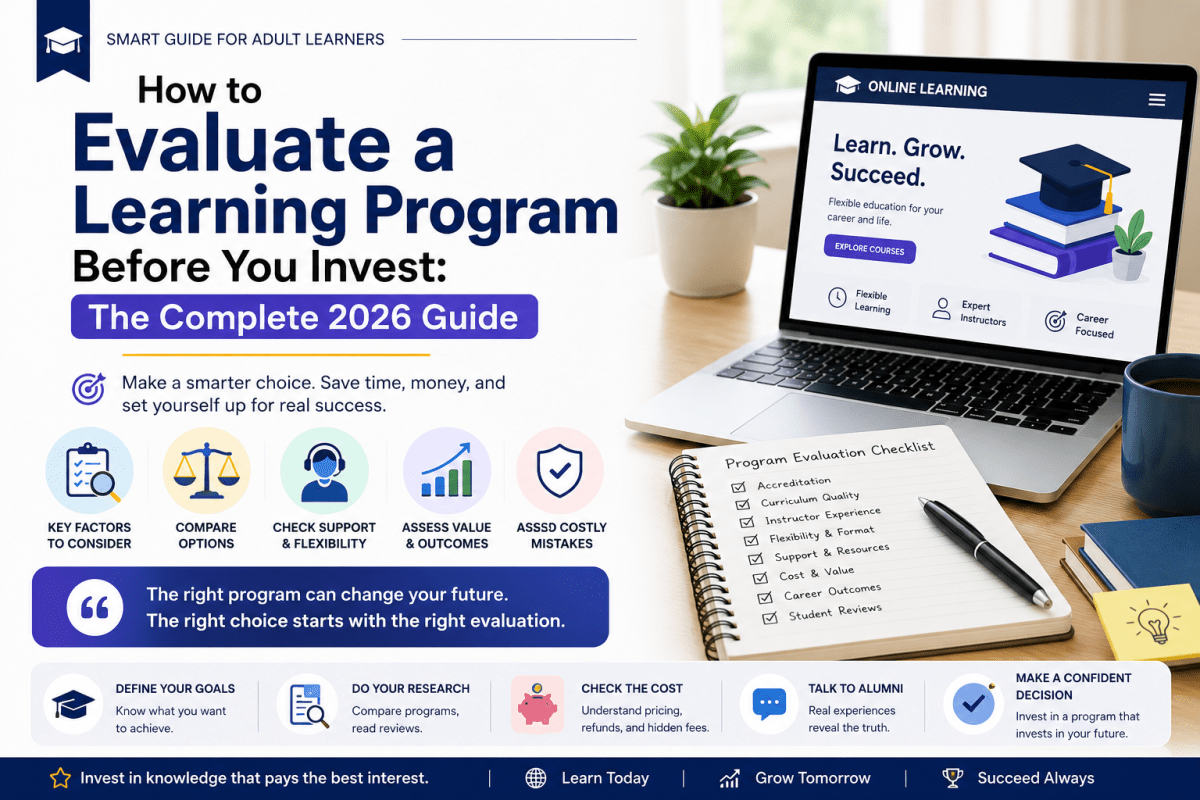
Choosing the right education program is one of the most important career decisions you’ll make. Whether you’re enrolling in an online certification, professional bootcamp, hybrid degree, or university program, taking time to evaluate your options can save you money, reduce frustration, and increase your chances of success.
Instead of relying on marketing promises, use the following checklist to determine whether a program truly delivers value.
A Smart Checklist Before You Enroll
1. Ask About the Real Completion Timeline
Many institutions advertise an “average” completion time that assumes students study full-time. Adult learners often balance careers, families, and other responsibilities.
Ask questions such as:
- What is the median completion time?
- How many students finish within the advertised schedule?
- Can the program be paused if unexpected life events occur?
Understanding realistic timelines helps you plan your education more effectively.
2. Learn the Completion and Dropout Rates
Completion statistics reveal much more than graduation rates.
Ask admissions representatives:
- What percentage of students finish?
- Why do students leave?
- What support is available for struggling learners?
Programs with high completion rates usually provide stronger academic guidance and better student support.
3. Verify Scheduling Flexibility
If you’re working full-time, flexibility matters.
Confirm whether:
- Assignments can be completed asynchronously.
- Recorded lectures are available.
- Live sessions are optional.
- Exams can be scheduled around work commitments.
Programs designed for adult learners understand that flexibility increases success.
4. Speak With Alumni
Current and former students often provide the most honest feedback.
Ask alumni:
- Was the program worth the investment?
- Did it improve your career?
- How responsive were instructors?
- Would you recommend it?
Real experiences often reveal strengths and weaknesses that marketing materials overlook.
5. Confirm Accreditation
Accreditation ensures educational quality and increases employer recognition.
Before enrolling:
- Verify institutional accreditation.
- Research professional recognition.
- Confirm industry acceptance.
- Check licensing requirements if applicable.
Never assume accreditation simply because a program appears professional online.
6. Examine Instructor Experience
Excellent instructors combine academic knowledge with practical experience.
Look for educators who have:
- Industry certifications
- Professional leadership experience
- Current knowledge of industry trends
- Active involvement in their field
Learning from experienced professionals improves both confidence and practical understanding.
7. Evaluate Career Services
Education should prepare you for employment—not simply provide a certificate.
Strong programs may include:
- Career coaching
- Resume reviews
- Interview preparation
- Internship opportunities
- Employer partnerships
- Networking events
These services can significantly improve your job prospects after graduation.
Warning Signs You Should Never Ignore
Even attractive programs may contain serious risks.
Be cautious if you notice the following:
- Unrealistic salary guarantees
- Pressure to enroll immediately
- Hidden tuition costs
- No independent student reviews
- Poor communication before enrollment
- Unclear refund policies
- Outdated curriculum
- Limited instructor access
Transparency is one of the strongest indicators of a trustworthy education provider.
Certificates vs. Degrees: Which Is Right for You?
Your choice should match your career goals—not simply your budget.
Choose a Certificate If You Want To:
- Learn a specific technical skill
- Earn an industry-recognized credential
- Upskill quickly
- Improve your current position
- Transition into a related career
Choose a Degree If You Need To:
- Meet professional licensing requirements
- Pursue graduate education
- Apply for leadership roles
- Enter regulated professions
- Build long-term academic credentials
Think beyond today’s job and consider where you want your career to be five or ten years from now.
How Artificial Intelligence Is Transforming Adult Learning
Artificial intelligence is rapidly changing education.
Modern learning platforms now offer:
- Instant feedback
- Personalized tutoring
- Practice assessments
- Writing assistance
- Coding support
- Language learning tools
AI makes learning more efficient, but it cannot replace experienced instructors, peer collaboration, or meaningful real-world practice.
The most effective programs use AI as a learning assistant rather than a replacement for human teaching.
Take Advantage of Employer Tuition Assistance
Many organizations invest in employee education through tuition reimbursement programs.
Before paying out of pocket:
- Ask your HR department about education benefits.
- Confirm reimbursement limits.
- Understand eligibility requirements.
- Keep copies of receipts and course documentation.
- Obtain written approval before enrolling.
Employer support can significantly reduce the financial burden of continuing education.
Build Your Career With a Clear Learning Strategy
Rather than enrolling in random courses, develop a structured learning plan.
Follow these steps:
- Identify your desired career position.
- Review current job postings.
- List required skills and qualifications.
- Compare them with your existing experience.
- Select programs that directly close those skill gaps.
- Evaluate each option using flexibility, support, cost, and career outcomes.
- Focus on completing one quality program before beginning another.
A focused learning strategy delivers better long-term results than collecting multiple unrelated certificates.
Final Thoughts
Education is one of the best investments you can make—but only when you choose wisely.
The right learning program should fit your schedule, provide practical skills, connect you with knowledgeable instructors, and help you move closer to your career goals.
Don’t let marketing slogans influence your decision. Instead, research carefully, ask thoughtful questions, compare multiple options, and invest in programs that offer real value.
Your future success depends not only on what you learn but also on choosing the right environment in which to learn it. A thoughtful decision today can lead to stronger skills, greater career opportunities, and lasting professional growth.