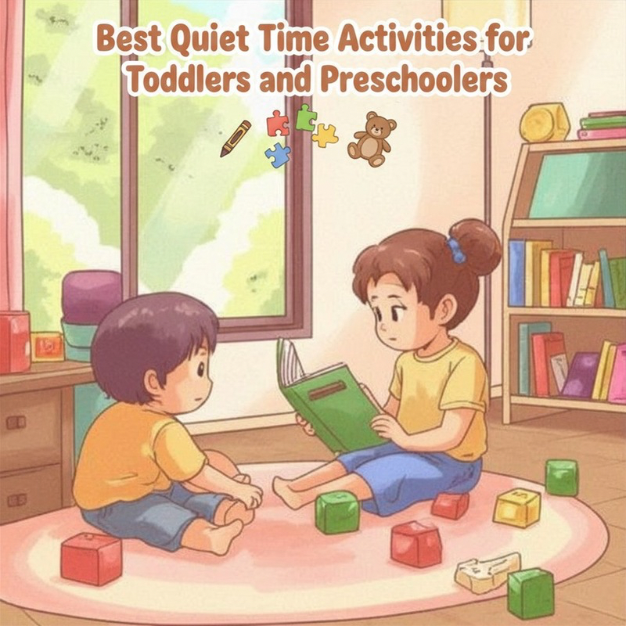


There are many great ways to create quiet time at home. The best activities are simple, suitable for young kids, and easy to enjoy without much help.
1. Picture Books and Story Time
Books are one of the best quiet time activities for young children. Bright illustrations, simple stories, and familiar characters help kids relax and focus. Some children like to look through books on their own, while others prefer a parent to read nearby.
Story time helps with language development, listening skills, and imagination. It also creates warm, peaceful moments that children often remember fondly.
2. Coloring and Simple Drawing
Coloring is a classic quiet activity because it is calming, creative, and easy to set up. Toddlers and preschoolers can use crayons, washable markers, or colored pencils to explore shapes, animals, letters, or fun scenes.
Drawing helps kids express themselves while improving hand control and coordination. Large, simple coloring pages are especially helpful for younger children.
3. Puzzle Books and Easy Mazes
Puzzle books and maze activities are great for quiet time because they keep children focused in a gentle way. Simple puzzles help children practice thinking, observing, and solving problems without pressure.
Large-page puzzle books made for young children are a fantastic choice. They are easy to hold, easy to understand, and fun to complete. They also fit well into a screen-free routine.
4. Building with Blocks
Blocks can be both active and peaceful, depending on how a child uses them. Quiet block play allows children to build towers, houses, roads, or creative shapes while staying focused and calm.
This kind of play supports imagination, fine motor skills, and early problem-solving. It also gives kids the freedom to create something on their own.
5. Sticker Books and Activity Books
Sticker books are very popular with toddlers and preschoolers because they feel playful and fun while still being calming. Children enjoy choosing where to place stickers, matching shapes, or decorating simple scenes.
Activity books with tracing, matching, or find-the-object pages can also work very well during quiet time.
6. Sensory Bins with Gentle Materials
A well-prepared sensory bin can be a peaceful, quiet time activity, especially when it uses soft items like pom-poms, felt shapes, large buttons, or safe scooping toys. Children enjoy touching, sorting, and exploring at their own pace.
It is best to keep sensory bins simple during quiet time so they do not become too stimulating.
7. Soft Music and Independent Play
Some children enjoy listening to soft background music while playing quietly with dolls, stuffed animals, or pretend kitchen toys. This type of play encourages imagination and can feel very comforting.
A child may quietly act out stories, tuck in a teddy bear, or pretend to cook lunch. These simple moments are valuable and encourage development.
How Quiet Time Helps Early Learning
Quiet time activities are not only peaceful; they also support important learning skills.
When children color, they strengthen hand-eye coordination. When they do puzzles, they build problem-solving skills. When they look through books, they improve vocabulary and early literacy. When they play independently, they build confidence and creativity.
These quiet activities also help children practice attention. In a busy world full of noise and screens, learning how to focus on one task at a time is an important skill.
Screen-Free Fun That Parents Appreciate
Many parents are looking for screen-free activities that still keep their children happy and engaged. Quiet time activities are perfect for this. They provide a calm alternative to tablets, phones, or fast-moving videos.
Screen-free quiet time can help reduce overstimulation and create a more peaceful home routine. It also shows children that fun does not always need to come from a screen. Books, crayons, puzzles, and simple toys can help create some of the best childhood memories.
Tips for Creating a Successful Quiet Time Routine
A quiet time routine does not have to be perfect. It just needs to feel calm, welcoming, and realistic for your child’s age.
Start by choosing one or two activities. Set up a cozy corner with books, crayons, puzzles, or favorite soft toys. Keep the space simple and free from too many distractions.
Consistency helps, too. Quiet time can happen after lunch, before nap time, in the late afternoon, or whenever your family needs a calmer part of the day. Over time, children will understand the routine and enjoy the comfort it brings.
Most importantly, keep expectations age-appropriate. A toddler may only stay engaged for a few minutes at first, and that’s perfectly fine. Quiet time gradually grows with practice.
Great for Home, Travel, and Daily Routines
One of the best aspects of quiet time activities is that they are easy to use almost anywhere. At home, they can lead to smoother afternoons and calmer evenings. During travel, they can help children stay relaxed in the car, on a plane, or while waiting.
They are also helpful for busy parents who want meaningful activities with little setup. A small basket of books, puzzles, crayons, and activity pages can go a long way.
Final Thoughts
Quiet time activities for toddlers and preschoolers are simple but powerful parts of early childhood. They create peaceful moments, support important learning skills, and allow children to enjoy calm, creative play.
From books and coloring to puzzles and blocks, these activities remind us that children do not always need loud entertainment to stay engaged. Sometimes, the most meaningful learning happens in the quietest moments.
If you want easy ways to bring more calm, focus, and screen-free fun into your child’s day, quiet time activities are a great place to start.