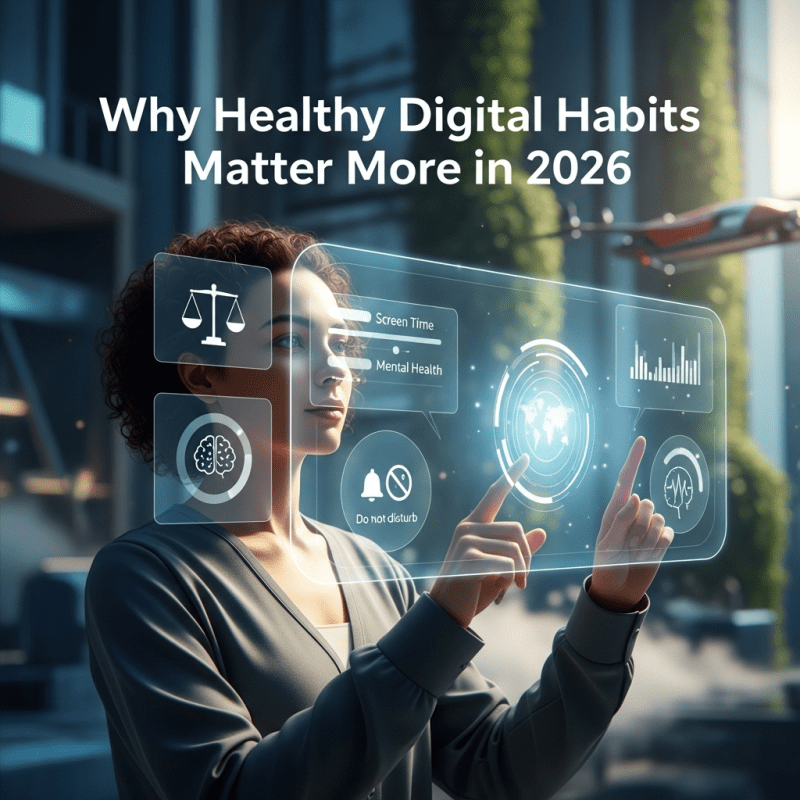
Why Healthy Digital Habits Matter More in 2026
Children are growing up in a world filled with screens. Phones, tablets, smart TVs, school platforms, and AI tools are now normal parts of everyday life. Common Sense Media’s policy report states that digital and AI literacy is now more important due to the rise of AI and the known risks of social media. As of 2026, 25 U.S. states have put some form of media or digital literacy laws in place.
This doesn’t mean technology is always harmful. It shows that children need help in using it wisely. Healthy digital habits can help kids:
- balance screen time with real-life play
- think critically about what they see
- protect their privacy
- build self-control
- use technology more intentionally
These habits are essential life skills today, not just optional extras. That’s why schools, parents, and child-safety groups are focusing more on digital well-being.
One of the best ways to teach healthy digital habits is to avoid making technology seem magical or dangerous. Children thrive when adults treat screens as tools that can be useful at times but not always.
For instance, a child might use a device to:
- watch an educational video
- practice reading
- talk with family
- explore a creative app
- listen to a story
But that same child also needs:
- outdoor play
- face-to-face conversations
- books
- quiet times
- sleep routines
- opportunities for boredom and imagination
The popularity of screen-free activity searches shows many families are trying to restore this balance in practical ways.
Create Simple Family Rules That Children Can Understand
Healthy digital habits work better when the rules are simple and consistent. Children do not need long lectures every day. They need clear expectations they can remember.
Examples of family rules:
- no screens during meals
- no devices right before bed
- outdoor play before tablet time
- screens stay in shared spaces
- ask before downloading or clicking
- talk to an adult if something online feels strange
These habits succeed because they link technology to routine rather than constant access. The updated Common Sense curriculum also stresses intentional and safe use of technology instead of passive, endless use.
Teach Kids to Think, Not Just Tap
A major part of digital well-being is helping children become thoughtful users, not just quick users. They should learn to ask questions like:
- Is this true?
- Who made this?
- Is this kind?
- Should I share this?
- Does this make me feel good or stressed?
Parents.com reports that the new digital literacy curriculum emphasizes critical thinking, safe technology use, and newer online issues like deepfakes and parasocial relationships.
This shift is important. Healthy digital habits are not only about setting time limits. They also involve judgment, awareness, and emotional understanding.
Keep Conversation Part of the Routine
Children are more likely to develop healthy digital habits when adults keep talking with them instead of just correcting them. Common Sense Media’s Carpool Conversations resource is based on this idea. It is a podcast series meant to help kids and adults discuss digital-life topics in easy, pressure-free ways, using ideas from the organization’s Digital Literacy & Well-Being Curriculum.
This serves as a reminder for families: you do not have to be an expert in technology to guide a child. Simple questions can help:
- What did you watch today?
- What do you like about that app?
- Did anything online confuse you?
- What would you do if someone shared something unkind?
- How do you feel after spending a long time on a screen?
Frequent, small conversations often work better than one serious talk.
Make Screen-Free Time Feel Positive
Healthy digital habits are easier to build when screen-free time feels enjoyable, not like a punishment. This is why current family trends matter. Pinterest’s 2026 report shows strong growth in searches about screen-free family life and more experience-rich parenting.
Instead of just saying “put the tablet away,” it can be helpful to suggest something meaningful to do instead:
- puzzle books
- coloring
- building toys
- story time
- water play
- family walks
- simple cooking
- crafts
- nature hunts
When real-world play is fun, children are less likely to view screens as the only exciting part of their day.
Model the Habits You Want to See
Children observe adults closely. If parents want kids to develop healthy digital habits, the family should practice those habits together.
This might look like:
- putting phones away during meals
- pausing notifications during family time
- reading instead of scrolling sometimes
- talking openly about taking breaks from devices
- showing that adults also need balance
The same low-pressure, curious approach encouraged by Common Sense Media’s family resources applies here. Healthy digital habits grow more naturally when they feel shared rather than one-sided.
Toddlers
Keep screen use short, simple, and supervised. Focus on songs, books, movement, and hands-on play.
Preschoolers
Use simple family rules. Offer plenty of screen-free alternatives like crafts, pretend play, and activity books.
School-age kids
Start teaching critical thinking, privacy, kindness online, and how to question what they see.
Older kids
Discuss digital choices, attention, online behavior, AI tools, and emotional impact more openly.
The routine will vary by family, but the goal remains the same: helping kids use technology more mindfully and less automatically.
Final Thoughts
Teaching kids healthy digital habits in 2026 is about helping them develop balance, judgment, and confidence. Families are clearly seeking that balance, as seen by the increasing interest in screen-free and no-phone searches.
At the same time, schools and child-safety groups view digital well-being as a vital life skill, focusing on lessons about AI, deepfakes, critical thinking, and safe use.
The good news is that healthy digital habits do not demand perfection. They start with simple routines, open conversations, realistic rules, and more opportunities for real-life play. For many families, these small changes can make technology feel less overwhelming and childhood feel more balanced.