Introduction
The word virus can sound scary, especially for children. But when kids learn about what a virus is, they can feel safer, smarter, and more prepared.
What Is a Virus? A Simple Guide for Kids and Parentsand cause problems. Some viruses can make people sick, while others affect computers, tablets, and phones.
In this simple guide, we will explain viruses in a friendly way for kids, parents, and teachers.
What Is a Human Virus?
A human virus is a tiny germ that can enter the body and sometimes make a person sick. Viruses are so small that we cannot see them with our eyes.
Some common sicknesses caused by viruses include:
- The common cold
- Flu
- Some coughs
- Some stomach bugs
When a virus enters the body, the immune system works hard to fight it. That is why children may feel tired, warm, or need more rest when they are sick.
Viruses can spread from one person to another in many simple ways.
They may spread when someone:
- Coughs or sneezes
- Touches dirty surfaces
- Shares cups, spoons, or tissues
- Does not wash hands properly
- Touches their mouth, nose, or eyes with unclean hands
This is why parents and teachers always remind children to wash their hands.
Simple Healthy Habits for Kids
Children can help protect themselves and others by practicing small daily habits.
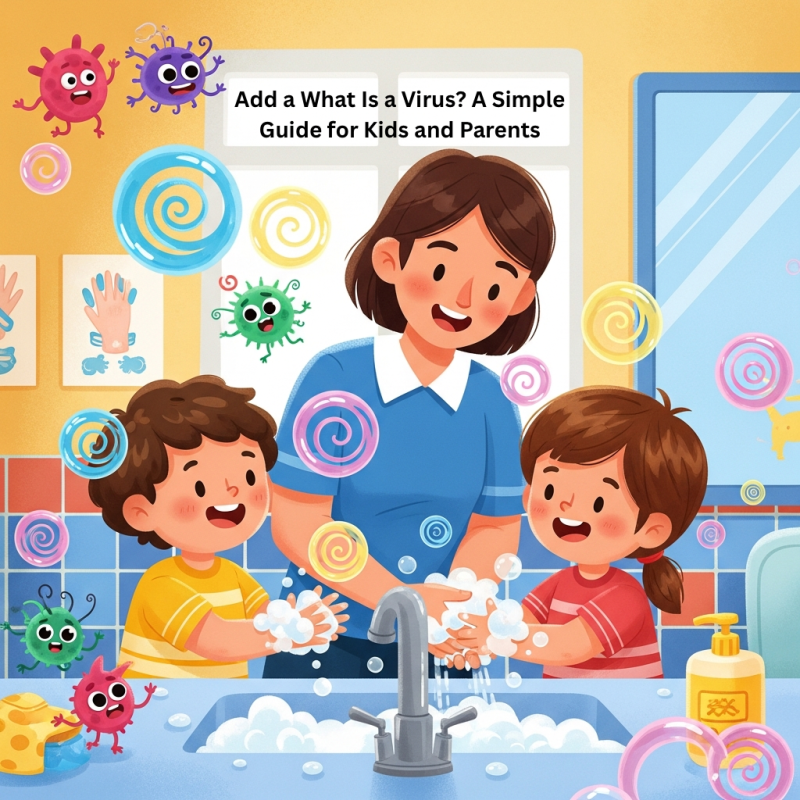
- Wash Hands Often
Kids should wash their hands with soap and water before eating, after using the bathroom, after playing outside, and after coughing or sneezing.
- Cover Coughs and Sneezes
Children can cough or sneeze into a tissue or their elbow. This helps stop germs from spreading to friends and family.
- Rest When Sick
Rest helps the body recover. When children feel sick, staying home and relaxing can help them get better and protect others.
Water helps the body stay fresh and healthy. Drinking enough water is a simple habit that supports good health.
- Eat Healthy Foods
Fruits, vegetables, soups, and balanced meals help children grow strong and support their bodies.
What Is a Computer Virus?
A computer virus is not a germ. It is a harmful program that can damage a computer, tablet, or phone.
A computer virus may:
- Make a device slow
- Delete files
- Show strange pop-ups
- Steal private information
- Spread to other devices
Kids should always ask an adult before clicking unknown links, downloading games, or opening strange messages.
Human Virus vs Computer Virus
A human virus affects the body. A computer virus affects a device.
Both can spread, but they are very different. A human virus spreads between people, while a computer virus can spread through unsafe links, downloads, emails, or websites.
Teaching children this difference can help them understand health safety and online safety.
How Parents Can Explain Viruses to Kids
Parents can explain viruses in a calm and simple way:
“A virus is something tiny that can spread. Some viruses can make people sick, and some viruses can harm computers. We can stay safer by washing our hands, resting when sick, and being careful online.”
This explanation is simple, friendly, and not too scary for young children.
Fun Learning Activity for Kids
Here is a simple activity parents and teachers can try.
Ask children:
“What are three things we can do to stop germs from spreading?”
Possible answers:
- Wash hands
- Cover coughs
- Use tissues
- Rest when sick
- Keep things clean
Children can also draw a poster called:
“Healthy Habits at Home”
They can draw soap, water, tissues, fruits, and a happy child resting.
Why Learning About Viruses Is Important
Learning about viruses helps children understand the world around them. It teaches them responsibility, kindness, and safety.
When kids learn healthy habits, they can help protect themselves, their friends, their family, and their classroom.
They also learn that online safety is important. Just like we protect our bodies from germs, we should protect our devices from harmful links and unsafe downloads.
Final Thoughts
Viruses are tiny, but good habits can make a big difference.
Children can stay healthier by washing their hands, covering coughs, eating well, drinking water, and resting when they are sick. They can also stay safer online by asking adults before clicking links or downloading anything.
With simple education, kids can feel confident, smart, and safe.