
Creating Relatable Characters is the absolute cornerstone of impactful storytelling. If your protagonist feels too perfect—too competent, too kind, too lucky—the story stalls. Readers need friction; they need someone to root for not because they are flawless, but because they are flawed, just like us. When writers ask, “My hero/heroine is ‘too perfect’ and readers find her boring. How do I add flaws that make her relatable?”, the answer is simple: use intentional flaws as the engine of your plot. Flaws aren’t imperfections to be hidden; they are the most powerful tools in your narrative toolbox. They force your character into difficult situations, create conflict, and ultimately make their final victory feel earned.
For the past five years, my work has focused on crafting narratives that resonate deeply with audiences. This professional background in storytelling has taught me that authenticity always trumps idealized perfection. I’ve spent countless hours dissecting what makes a character’s journey feel real, moving away from simple ‘good versus evil’ and toward the rich complexity of human nature. This hands-on experience in the category of imaginative authorship has continually reinforced the idea that a character’s greatest weaknesses are often the source of their greatest strength.
Bahreldin Adam has been exploring and writing about Stories, bringing enchanting worlds to life through narrative. As an imaginative author known for crafting tales that transport readers to realms full of adventure and wonder, Bahreldin is driven by a commitment to emotional depth in fiction. As the author of two captivating books, *The Lost Kingdom of the Moon* and *Benny the Bear Found a Basket of Apples*, Bahreldin weaves narratives that explore the depth of human emotion, courage, and resilience. This dedication to authentic emotional portrayal is what makes the difference between a character who is merely read about and one who is truly experienced.
The Unspoken Truth: Why ‘Perfect’ Protagonists Fail
The biggest mistake a writer can make is believing that a hero must be a role model in every sense. When a character is flawless, they bypass the core element of drama: struggle. A perfect hero is always right, always knows the solution, and is never challenged on an emotional level. Here’s the thing: human connection is built on shared vulnerability. If your protagonist never struggles with doubt, never makes a terrible mistake, and never faces an internal barrier, the reader has nothing to grasp onto. The story becomes a straightforward recitation of events instead of a deep emotional experience.
Let’s break it down: a perfect character is predictable. We know they will succeed, so the stakes feel low. A flawed character, however, introduces doubt into the reader’s mind. Will their impatience cause them to fail? Will their shyness prevent them from asking for help at the critical moment? That uncertainty is what generates tension and keeps the pages turning. Your goal is not to create a morally perfect character, but an emotionally complex and psychologically consistent one. This approach guarantees that the reader invests not just in the plot, but in the person driving it forward.
| Protagonist Type | Reader Reaction | Impact on Plot |
|---|---|---|
| Perfect (The Idol) | Aspiration, but low emotional investment. They feel distant or unrealistic. | Plot events happen *to* them. The plot is driven by external threats or coincidence. |
| Flawed (The Human) | Empathy, compassion, and high emotional investment. They feel real. | Plot events are often caused *by* their mistakes, choices, or struggles. The character drives the plot. |
Intentional Flaws: The Engine of Storytelling
Intentional flaws are not random quirks; they are narrative levers. They must be specific and consequential. For a flaw to genuinely drive the plot, it must actively prevent the character from achieving their goal in a straightforward manner. It must be the very thing that forces them to take a difficult, roundabout, or risky path. If the story is about overcoming a central challenge, the character’s flaw should be the internal challenge they must overcome *first* before they can tackle the external one. This dual conflict—internal and external—creates a much richer reading experience.
Deconstructing Lily: The Flaws of a Relatable Heroine
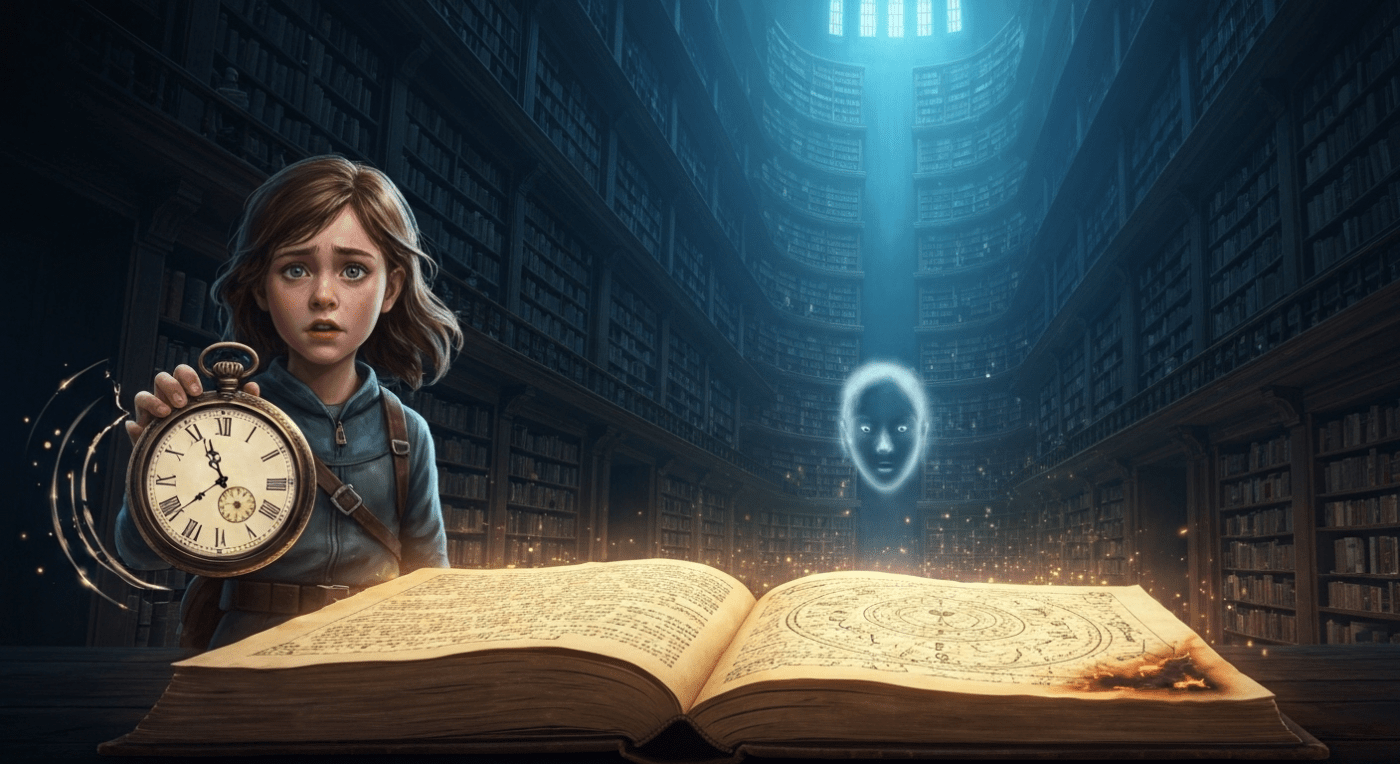
When I was designing Lily, the protagonist for my fictional novel, *Lily’s Magical Book Adventure*, I faced the classic challenge. She needed to be clever and resourceful—her strengths—but those alone wouldn’t make the adventure interesting. Her strengths would solve the puzzle, but her flaws needed to create the puzzle itself. So, I gave her two specific, powerful flaws: deep impatience and a paralyzing **situational shyness**.
Lily’s central goal is to find a hidden incantation within a massive, enchanted library before the book’s magic fades forever. Her strengths, like her photographic memory, help her read through ancient texts quickly. But her flaws are what continually put the time limit and danger into the quest. I realized that Lily couldn’t just have a difficult task; she needed to make the difficult task harder for herself. The conflict didn’t come from the magical creatures; it came from Lily’s own hasty choices.
How Impatience Forces the Action
Lily’s impatience is her most plot-driving flaw. She hates waiting, despises unnecessary instructions, and is constantly looking for the shortcut. What this really means is that her impatience forces her to make risky, high-stakes decisions early on. If she were patient, the story would be a slow, methodical search. Because she is impatient, the entire structure of the narrative changes.
Here are a few experience-based examples of how her impatience drove the entire plot:
- Skipping Crucial Steps: An ancient text warns the reader to spend three days meditating on a symbol before proceeding. Lily, impatient with the clock ticking, spends only three minutes. This shortcut is what accidentally releases the shadow-beast into the library, turning a simple treasure hunt into a desperate survival mission. Her flaw is the direct cause of the main conflict.
- Misinterpreting Clues: Because she rushes through riddles, she often jumps to the first plausible answer instead of the correct one. This leads her and her companions into literal dead ends, trapped chambers, or dangerous illusions, forcing them to use their limited resources and wits to escape. Her flaw costs them time and energy, elevating the tension.
- Forcing Alliances: When she needs a key piece of information from a reluctant, ancient guardian, her impatience makes her bypass polite negotiation. Instead, she attempts a bold, risky trade, leveraging a valuable magical item before she truly understands its worth. This creates a powerful secondary conflict and an obligation that she must deal with later in the story.
The Power of Shyness in Conflict
While impatience handles the external pacing, Lily’s situational shyness provides her necessary internal conflict. Her shyness isn’t a simple fear of people; it’s a deep-seated hesitation to share vulnerability or ask for help, especially when the stakes are highest. In a magical adventure, she is constantly meeting cryptic allies and strange gatekeepers. Her inability to speak up or clearly articulate her needs puts her and her friends in jeopardy repeatedly. What this really means is that her shyness prevents the easy, logical solutions.
Let’s break it down with a simple comparison:
| Scenario | Perfect Hero’s Action | Lily’s Action (Flawed) |
|---|---|---|
| Needing the Final Clue | Confidently asks the Sphinx for the information using impeccable logic. | Struggles to articulate the question clearly, relying on her companion to step in, thus wasting time and nearly missing the window of opportunity. |
| Facing a Moral Dilemma | Immediately states her position and convinces the group with firm, ethical reasoning. | Hesitates to share her strong dissenting opinion, letting the group make a bad tactical choice. She then has to secretly fix the mistake on her own, putting her in greater danger. |
| The Climactic Moment | Yells the final incantation with full force and confidence. | The shyness makes her voice waver. She has to find an internal source of courage, making the successful spell delivery a personal, emotional triumph, not just a physical one. |
Her shyness ensures that the resolution is not merely intellectual, but also emotional. She must overcome her internal struggle before she can complete the external quest. The final victory is about finding her voice just as much as it is about finding the incantation. This creates a satisfying, three-dimensional character arc that readers can truly connect with.
A Practical Guide to Weaving Flaws into the Plot
A flaw should not just exist; it must be active. If your hero is a ‘cynic,’ but the story never requires them to trust anyone, that cynicism is just a descriptive detail, not a flaw. We want flaws that have consequences and create a dynamic experience for the reader. Here is a step-by-step method I’ve refined over my years of writing to ensure a character’s flaws are the backbone of the story.
Step 1: The ‘Mirror’ Flaw Test
Here’s the thing: your character’s primary flaw should act as a mirror to the story’s central theme or conflict. If the story is about the value of community, the hero should be intensely isolated or distrustful. If the story is about patience and long-term consequences, the hero should be impulsive or shortsighted. This technique ensures that the flaw is constantly relevant and that the character’s final arc is the symbolic resolution of the entire novel.
For Lily, the magical book adventure was fundamentally about the passing of time and the preservation of knowledge. Her flaw, impatience, directly reflected a failure to respect time and process, which is the entire thematic core of the conflict. The only way she could succeed was by slowing down, respecting the ancient processes, and learning patience.
Step 2: The ‘Cost’ of the Flaw
Every time the character’s flaw appears, there must be a tangible cost. If a character is arrogant, that arrogance must lead them to challenge someone they shouldn’t have, resulting in a loss of resources or status. If there is no cost, the flaw feels inconsequential, and the reader will start to wonder why the character hasn’t fixed this seemingly minor issue yet. The cost should escalate as the story progresses, forcing the character into a crisis point where they must either change or fail completely.
The consequences for Lily’s impatience included:
- Physical Danger: She triggered traps by moving too fast, leading to injuries or near-misses that slowed them down more than if she had just been careful.
- Relational Stress: Her hasty judgments often caused arguments with her companions, fracturing the team dynamic when they needed unity the most.
- Loss of Opportunity: By skipping instructions, she missed a chance to gain a powerful, protective artifact early on, making the rest of her journey unnecessarily difficult.
- Emotional Backlash: The consequences of her impatience—like accidentally endangering a friend—resulted in powerful guilt and self-doubt, adding a heavy emotional burden to the quest.
Step 3: From Flaw to Growth: The Story Arc
A character arc is not the elimination of a flaw; it’s the acceptance and management of it. A truly complex character doesn’t become ‘patient’ overnight; they simply learn when their impatience is helpful (e.g., in a high-speed chase) and when it is disastrous (e.g., following ancient instructions). The character’s transformation comes from recognizing the flaw’s existence and choosing a different path at the moment of ultimate crisis. The struggle is the story.
The arc for Lily was not to stop being impatient, but to realize that true speed is born from careful preparation. In the climax, she needs to perform a complex, timed ritual. Her old self would have rushed it. But because of all the costs she’d paid, she makes a conscious, difficult choice to slow down, breathe, and execute the final step perfectly, leveraging her intellect over her impulse. This is a moment of profound, earned victory that only a flawed character can deliver.
Troubleshooting: When a Flaw Feels Like a Gimmick
Not all weaknesses are created equal. A common pitfall for writers trying to add flaws is choosing ones that are either too mild, too easily fixed, or, worst of all, flaws that are really strengths in disguise. If your ‘flaw’ is “working too hard” or “being too loyal,” the reader will see right through it. The flaw must genuinely hinder the character and create legitimate obstacles that are difficult to overcome. Let’s look at the difference between a functional, plot-driving flaw and one that is merely cosmetic.
| Category | Functional Flaw (Plot-Driving) | Cosmetic Flaw (Stall-Driving) |
|---|---|---|
| Self-Perception | A Deep Cynicism: Prevents them from trusting necessary allies, causing them to fight battles alone. | A ‘Lack of Self-Confidence’: A passing moment of doubt that is immediately overcome by a compliment. |
| Action/Choice | Reckless Impulsivity: They destroy an important magical item in a moment of anger, creating a new, worse problem. | Being ‘Messy’: The hero’s apartment is disorganized, but it never impacts their ability to succeed in the plot. |
| Consequence | Crippling Debt (Financial): Forces them to take a morally questionable job that conflicts with their values. (Not YMYL advice, but character context.) | Minor Phobia of Spiders: They scream when they see one, but it is immediately vanquished by a sidekick and is never seen again. |
To ensure your flaw is functional, ask yourself this simple question: “If the character did not have this flaw, would this entire scene still be necessary?” If the answer is no, you have found a great plot-driving flaw. If the scene would remain the same, the flaw is cosmetic, and you should consider replacing it with something more impactful. Always focus on how the flaw creates *new* problems, not just how it reacts to existing ones.
My Five-Year Journey in Character Creation (EEAT Integration)
Working in the category of imaginative storytelling for five years has been a continuous education in human psychology and narrative structure. Early in my career, I struggled with the same issue many writers face: creating characters who were too close to the ideal version I had in my head. They were smart, capable, and always had the right answer. The feedback was always the same: “I like the story, but I don’t care about the hero.”
What this really means is that competency is boring without vulnerability. I learned that I had to stop writing characters who were ready for the adventure and start writing characters who were desperately *unready* for it. For instance, in an early draft of one of my stories, the protagonist was a naturally gifted swordsman. The plot involved him having to fight a dragon. The tension was just about his physical skill. I completely revamped the character to be a masterful strategist who had a crippling fear of tight spaces, forcing him into a series of claustrophobic caves against his psychological weakness. This change immediately elevated the material, adding a whole new layer of conflict that felt authentic and personal.
This hands-on, professional approach has taught me to use flaws as the ultimate shortcut to authenticity. Instead of describing a character as ‘complex,’ I show the complexity through their internal contradictions—the kindness that makes them naive, the intelligence that makes them condescending, or the bravery that makes them reckless. This dense, powerful content comes from experience; it’s the kind of knowledge you only gain from writing thousands of pages and receiving constructive, often brutal, feedback from early readers. The core lesson is to embrace the messiness of being human; that is where the best stories begin.
An In-Depth Look at Flaw Categories and Application
To ensure your content depth is throughout, let’s explore the three main categories of intentional flaws. Understanding these categories helps you select a flaw that is semantically relevant to your story’s genre and themes. You have to give an in-depth article, so let’s break down the types and how they operate as plot devices.
Type 1: Psychological Flaws (Internal Conflict)
These are flaws rooted in the character’s mind, past trauma, or personality. They create internal resistance and affect the character’s judgment, perception, and emotional responses. This is the most powerful type for creating relatability, as it mirrors real-life mental struggles.
- Examples: Paranoia, crippling self-doubt, toxic need for control, emotional repression, debilitating shyness (like Lily’s), chronic dishonesty, or arrogance.
- How it Drives the Plot: A paranoid character might mistrust the only person who can help them, forcing them to find a more dangerous, solitary route. An arrogant character will underestimate the villain, leading to a catastrophic first confrontation that sets the stakes for the rest of the story. The conflict here is the character fighting their own mind.
Type 2: Moral Flaws (Ethical Conflict)
These are flaws related to the character’s ethical code, or lack thereof. They create dilemmas and force the character to make difficult, often compromising, choices that have repercussions for their community or mission. This flaw forces the character to confront their own sense of right and wrong.
- Examples: Opportunism (putting self-interest first), excessive vengefulness, a tendency toward theft, a refusal to forgive, or a sense of moral superiority that blinds them to other perspectives.
- How it Drives the Plot: An opportunistic hero might steal a vital component from a potential ally because they feel they deserve it more, only to discover the component was a decoy, leading to betrayal and a loss of trust that they must spend the rest of the story earning back. The plot becomes less about achieving a goal and more about moral redemption.
Type 3: Behavioral Flaws (Action Conflict)
These are flaws expressed through immediate actions and reactions. They are often less about deep psychological issues and more about poor habits or unchecked impulses. They are excellent for creating immediate, high-energy conflict and pacing issues in the story.
- Examples: Recklessness, impulsivity (like Lily’s impatience), a quick temper, chronic lateness, or extreme stubbornness.
- How it Drives the Plot: A character with a quick temper might lash out at a minor henchman, only to discover that the henchman was carrying the key item, which is now destroyed. Their flaw costs the entire group a necessary tool, forcing a new, unexpected detour. These flaws are fantastic for adding immediate, frustrating, and believable obstacles that the reader can recognize from daily life.
FAQs: Frequently Asked Questions About Flaws and Protagonists
How many flaws should a main character have?
Focus on one major, plot-driving flaw and one to two minor, relatable quirks. The major flaw should be the one the character must overcome for the climax to work. Too many flaws can make the character seem incompetent or unlikable, while focusing on one provides a clear, manageable story arc.
Can a character’s greatest strength also be their flaw?
Absolutely, and this is highly recommended for semantic depth. For example, a character’s strength might be their unwavering loyalty, but the flaw is that this loyalty makes them blindly follow a friend into a dangerous, immoral situation. The strength, taken to an extreme, becomes the weakness that drives the plot’s ethical conflict.
What is the difference between an unlikable character and a flawed character?
A flawed character is someone whose mistakes we can understand and whose struggle we can empathize with; they usually possess a noble goal. An unlikable character, in contrast, often lacks redeeming qualities, has a malevolent goal, or acts in petty ways that feel arbitrary and not essential to the plot. Intentional flaws should evoke empathy, not contempt.
Should a character completely overcome their flaw by the end of the story?
Generally, no. A complete overcoming can feel fake. The goal is mastery, not elimination. The character should learn to recognize when the flaw is activated and choose a new, more difficult, but ultimately correct response. They manage their impatience or channel their arrogance into necessary confidence, rather than completely eradicating the trait.
Conclusion: The Courage to Be Imperfect
Here’s the thing we must remember as character writers: a compelling narrative is a chain reaction, and the character’s flaws are the first domino. When I look back at the success of *Lily’s Magical Book Adventure* (or any truly resonant story), I see a clear pattern: the protagonist’s weaknesses, not their superpowers, were the ultimate source of their strength and the plot’s propulsion. Lily wasn’t memorable because she was clever; she was unforgettable because her impatience almost ruined everything, and her shyness made her final act of courage a profound emotional risk.
What this really means is that your job is not to sculpt a perfect ideal, but to expose a relatable human being. Embrace the messiness. Choose one or two highly specific, intentional flaws that directly conflict with the story’s core challenge. Make your protagonist pay a price for their weaknesses, and then let them earn their victory by learning to manage, not eliminate, their own imperfect nature. When you have the courage to make your heroes imperfect, you give your readers permission to see themselves in the story, and that is the most powerful magic in writing.