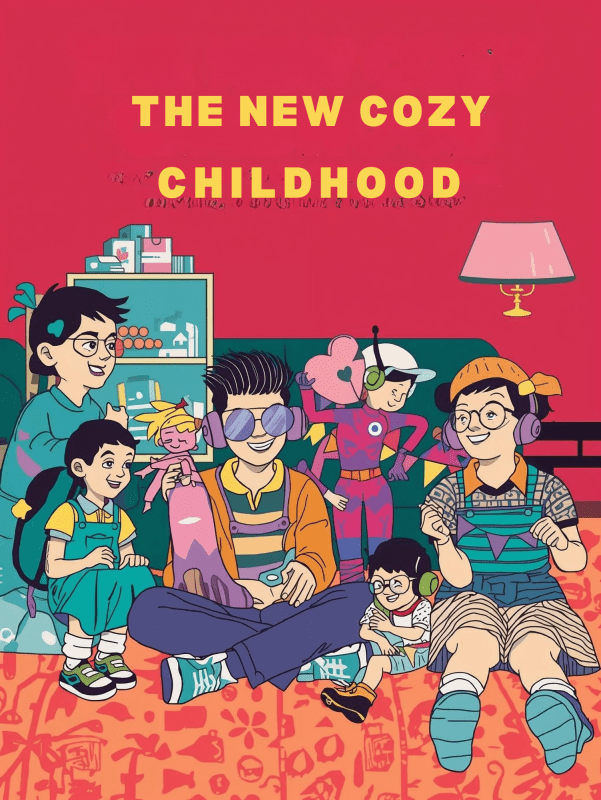
Something is changing in family life in 2026. Parents are still busy. Kids still navigate a world filled with screens, noise, and fast-moving entertainment. However, many families are turning towards a different path. They seek calmer routines, softer spaces, slower play, and more meaningful time together. According to Pinterest’s 2026 parenting trends, there is a growing interest in screen-free activities, offline learning, and more intentional family experiences. Parents.com reports that searches for “screen-free activities” rose by 200%, and “no phone summer” increased by 340%.
This shift does not mean families are rejecting modern life. Instead, they are trying to make childhood feel more human again. A cozy childhood is not about expensive furniture or creating a perfect social media home. It focuses on building small moments that feel safe, warm, creative, and genuine. It might be a basket of books by the sofa, a blanket fort in the living room, crayons on the kitchen table, a rainy-day puzzle, or an evening walk without devices. In 2026, this softer, slower style of family life is starting to feel more necessary than old-fashioned.
Many parents are beginning to understand that more stimulation is not always better. Children do not always need louder toys, faster apps, or busier schedules. Often, they need space to breathe, imagine, and engage in simple play. This shift is also linked to reading. The National Literacy Trust states that children and young people’s enjoyment of reading and daily reading rates are now at their lowest in over 20 years. In 2025, only 32.7% reported enjoying reading in their free time, and just 18.7% said they read daily for pleasure.
When reading, quiet play, and unstructured imagination fade away, parents notice the difference. Home can start to feel rushed, noisy, and somewhat disconnected. That is one reason cozy routines are gaining appeal. Families are looking for ways to bring back comfort, focus, and genuine togetherness. The National Year of Reading 2026 was announced specifically to tackle the sharp decline in reading among children, young people, and adults.
What a “cozy childhood” really means
A cozy childhood isn’t about laziness or boredom. It isn’t just doing less for the sake of doing less. It’s about choosing activities that let children fully engage in the moment. Instead of fast entertainment, it offers texture, rhythm, imagination, and calm. Rather than always consuming, children get to make, build, read, pretend, and notice.
That can include:
- storytime under a blanket
- slow weekend crafts
- soft music and coloring
- pretend play with simple toys
- baking together
- nature walks
- quiet reading corners
- or even just a cardboard box that becomes a rocket ship.
These moments may seem small, but they create a very different atmosphere in a home. They make childhood feel lived in, not rushed through.
Why children respond so well to softer, slower fun
Children often think best when life isn’t too packed. When play is slower, they have more room to invent games, tell stories, and stay with activities longer. A child with a few books, blocks, crayons, and open floor space can do far more than we sometimes expect. They can create worlds, solve little problems, and build routines around comfort and curiosity.
Research supports this idea. The National Literacy Trust says that reading for pleasure boosts literacy skills, well-being, empathy, confidence, and the ability to learn. It also reports that children who enjoy reading in their free time are much more likely to have above-average reading skills than those who don’t.
This is important because a cozy childhood is not just about looks. It has emotional and developmental value. Slower fun often gives children what rushed entertainment cannot: attention, connection, and time to think.
What parents are choosing in 2026
The family mood in 2026 focuses not only on cutting screen time but also on replacing some of that time with richer experiences. Parents.com summarizes Pinterest’s 2026 parenting report, stating that parents are using the platform for more screen-free, hands-on approaches and more intentional, experience-rich family life. Parents also utilize Pinterest to research purchases, plan family experiences, and create more engaging home environments.
This sheds light on why certain ideas are gaining popularity right now:
- Reading corners instead of more devices: A small reading nook can change the mood of a room. A blanket, a lamp, a few books, and a soft pillow make reading feel welcoming rather than forced.
- Simple toys instead of overstimulating ones: Blocks, dolls, toy animals, play scarves, pretend kitchens, train tracks, and art supplies remain favorites because they leave room for imagination.
- Hands-on crafts instead of passive entertainment: Children love cutting, gluing, coloring, painting, folding, and making. Crafting gives them the joy of creating something real with their hands.
- Slow family rituals instead of constant rushing: Hot chocolate and bedtime stories, Saturday baking, nature walks after school, and quiet drawing before dinner. These rituals don’t have to be elaborate to be meaningful.
Why this trend feels new and timeless at the same time
This topic is interesting because, in one sense, there is nothing new here. Families have always read books, built forts, and played make-believe. However, in 2026, these activities feel newly valuable as they push back against the speed of modern life. They are becoming intentional choices, not just habits. The “new cozy childhood” is about reclaiming older kinds of joy in a world that often feels too fast.
That makes it appealing for readers. It also holds value for brands and publishers because it connects naturally to books, crafts, puzzles, home products, children’s furniture, family wellness, and educational tools. Parents.com shares that 64% of parents on Pinterest research products before buying, indicating that this family lifestyle content can hold real commercial value too.
How parents can bring this feeling into everyday life
The positive news is that creating a softer, slower childhood does not demand a complete lifestyle overhaul. It can start with a few small changes:
- Keep books accessible to children.
- Leave paper and crayons out on the table.
- Make one corner of the room feel warm and inviting.
- Choose one evening a week for family games or story time.
- Take a short walk without phones.
- Let boredom linger a bit longer before stepping in to solve it.
Often, children do not need grand performances from adults. They just need the freedom to play in a calmer way.
Why this topic fits Bahrku so well
Bahrku already emphasizes stories, imagination, reading, and family-friendly creativity. That is why this topic feels right for your site. A post like this resonates because it addresses what many parents feel but may struggle to articulate. They are not just seeking “activities.” They want a better atmosphere for family life. They desire childhood to feel gentler, richer, and more memorable.
That is exactly the kind of emotional, practical topic that readers connect with.
Final thoughts
The new cozy childhood is not about perfection. It is about opting for a little more warmth, slowness, and room for wonder. In 2026, this might be one of the most modern parenting choices available.
When the world feels fast, soft and simple things matter more. A pile of books, a rainy afternoon craft, a quiet reading lamp, or a child building a tiny world on the floor. These moments may not be dramatic, but they are often the ones children remember the longest.
And that is why this trend is worth exploring.