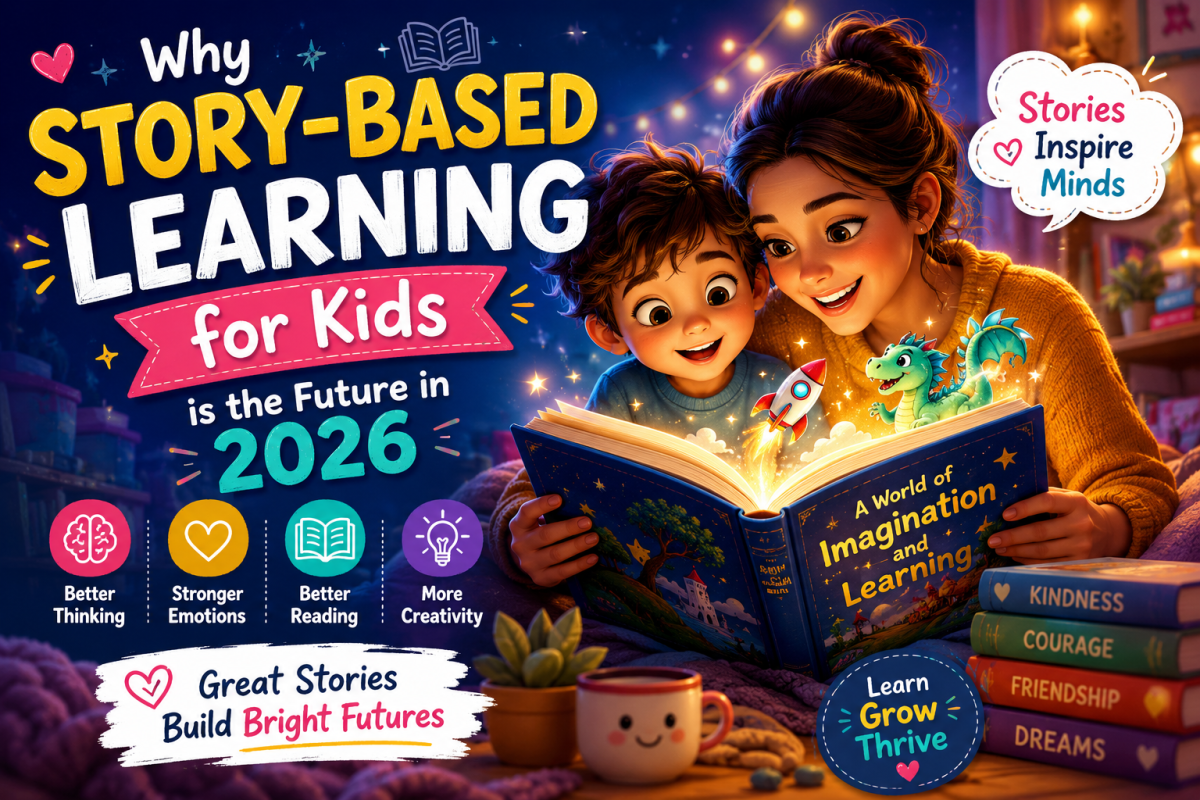

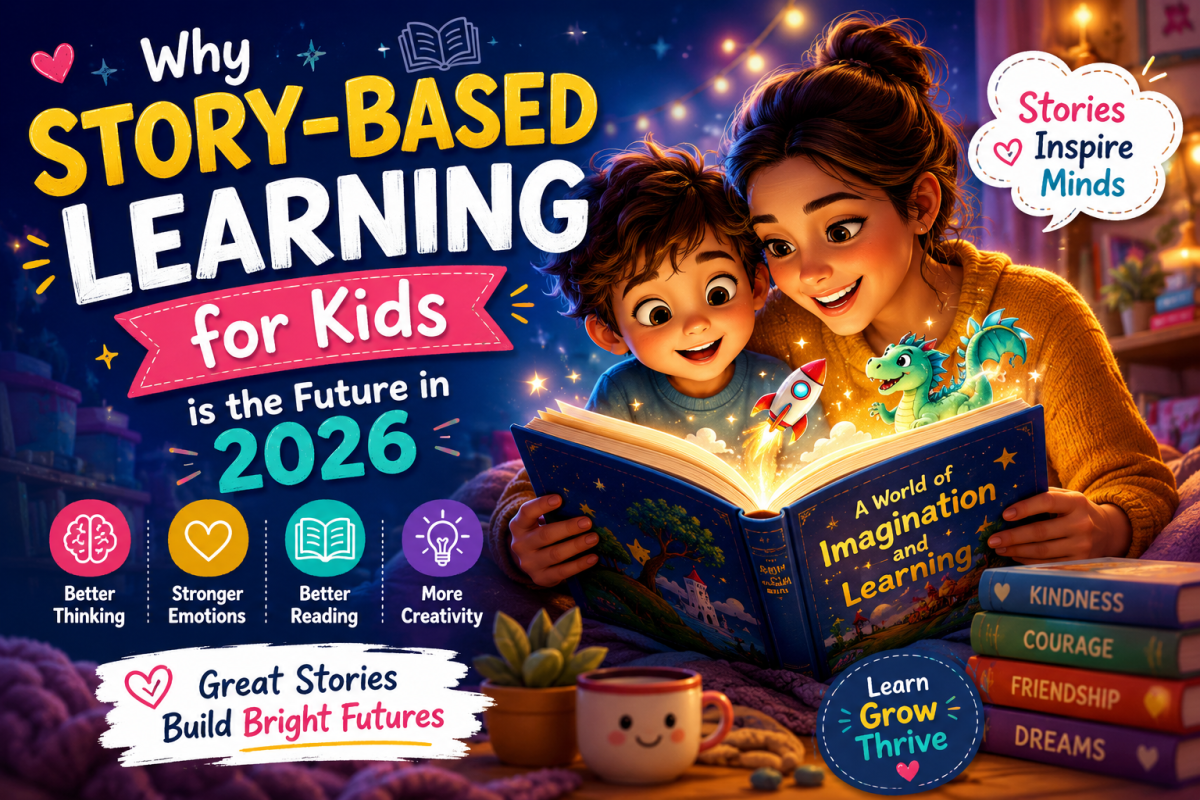
In a world filled with screens, notifications, and endless digital distractions, many parents are searching for meaningful ways to help their children learn and grow. One educational approach that continues to gain popularity in 2026 is story-based learning.
Stories have always been powerful teaching tools. Long before smartphones and tablets existed, people learned important lessons through storytelling. Modern research continues to support the long-held belief of parents and teachers: children learn better when engaging stories present information.
At Bahrku, we believe stories are much more than entertainment. They inspire curiosity, build confidence, improve language skills, and help children understand the world around them.
What Is Story-Based Learning?
Story-based learning is an educational method that uses stories to teach concepts, values, and skills. Instead of presenting information through memorization alone, children learn through characters, adventures, challenges, and meaningful experiences.
When children follow a story, they naturally become emotionally connected to the characters. This emotional connection helps them remember lessons and information more effectively.
For example:
- A story about sharing teaches kindness.
- A story about a young explorer teaches problem-solving.
- A story about friendship teaches empathy.
- A story about nature teaches science concepts.
Children often remember stories long after they forget facts and worksheets.
Why Story-Based Learning Is Growing in 2026
Parents today want more than test scores. They want their children to develop creativity, emotional intelligence, communication skills, and confidence.
Story-based learning supports all of these goals.
Some of the reasons families are embracing story-based learning include:
1. Better Reading Skills
Children who regularly engage with stories develop stronger vocabulary, comprehension, and language skills.
Stories introduce new words naturally and encourage children to understand meaning through context.
2. Increased Creativity
Stories invite children to imagine new worlds, characters, and possibilities.
This imagination becomes the foundation for creative thinking, innovation, and future problem-solving skills.
3. Stronger Emotional Intelligence
Stories help children understand emotions such as
- Happiness
- Sadness
- Fear
- Courage
- Empathy
- Kindness
By experiencing these emotions through characters, children learn how to recognize and manage their own feelings.
4. Improved Attention Span
Unlike fast-paced digital content, stories encourage children to focus and follow a sequence of events.
This helps build concentration and listening skills that are valuable both at home and in school.
The Science Behind Story Learning
Educational experts have discovered that stories activate multiple areas of the brain at the same time.
When children hear a story, they use the following:
- Language processing
- Visualization
- Emotional understanding
- Memory recall
- Critical thinking
This technique creates a richer learning experience compared to simply memorizing facts.
Stories help transform information into meaningful experiences.
Storytelling Builds Strong Family Connections
One of the greatest benefits of story-based learning is the opportunity for family bonding.
Reading together creates special moments between parents and children.
Benefits include:
- Quality family time
- Improved communication
- Positive bedtime routines
- Stronger emotional connections
- Shared learning experiences
Even ten minutes of reading together each day can have a lasting impact.
How Bahrku Supports Story-Based Learning
At Bahrku, our mission is to make learning enjoyable through engaging stories and educational content.
Our stories focus on themes such as the following:
Children learn the importance of helping others and showing compassion.
Courage
Young readers discover how to overcome challenges and believe in themselves.
Friendship
Stories teach cooperation, trust, and teamwork.
Curiosity
Children are encouraged to ask questions and explore new ideas.
Healthy Habits
Fun stories introduce positive routines and healthy choices.
These lessons become easier to understand when presented through relatable characters and adventures.
Simple Ways to Use Story-Based Learning at Home
Parents do not need expensive resources to start.
Here are a few easy ideas:
Read Together Daily
Even 10–15 minutes each day can make a difference.
Ask Questions
After reading, ask:
- What was your favorite part?
- What lesson did the character learn?
- What would you have done differently?
Encourage Story Creation
Invite children to create their own stories using imagination and creativity.
Connect Stories to Real Life
Help children apply lessons from stories to everyday situations.
Looking Ahead
Stories teach more than reading.
They teach empathy.
They teach courage.
They teach problem-solving.
Most importantly, they help children discover the joy of learning.
In 2026 and beyond, parents who embrace storytelling are giving their children a powerful advantage that extends far beyond the classroom.
At Bahrku, we are proud to support families through inspiring stories that spark imagination, build confidence, and create lifelong learners.
Because every great learner begins with a great story.