
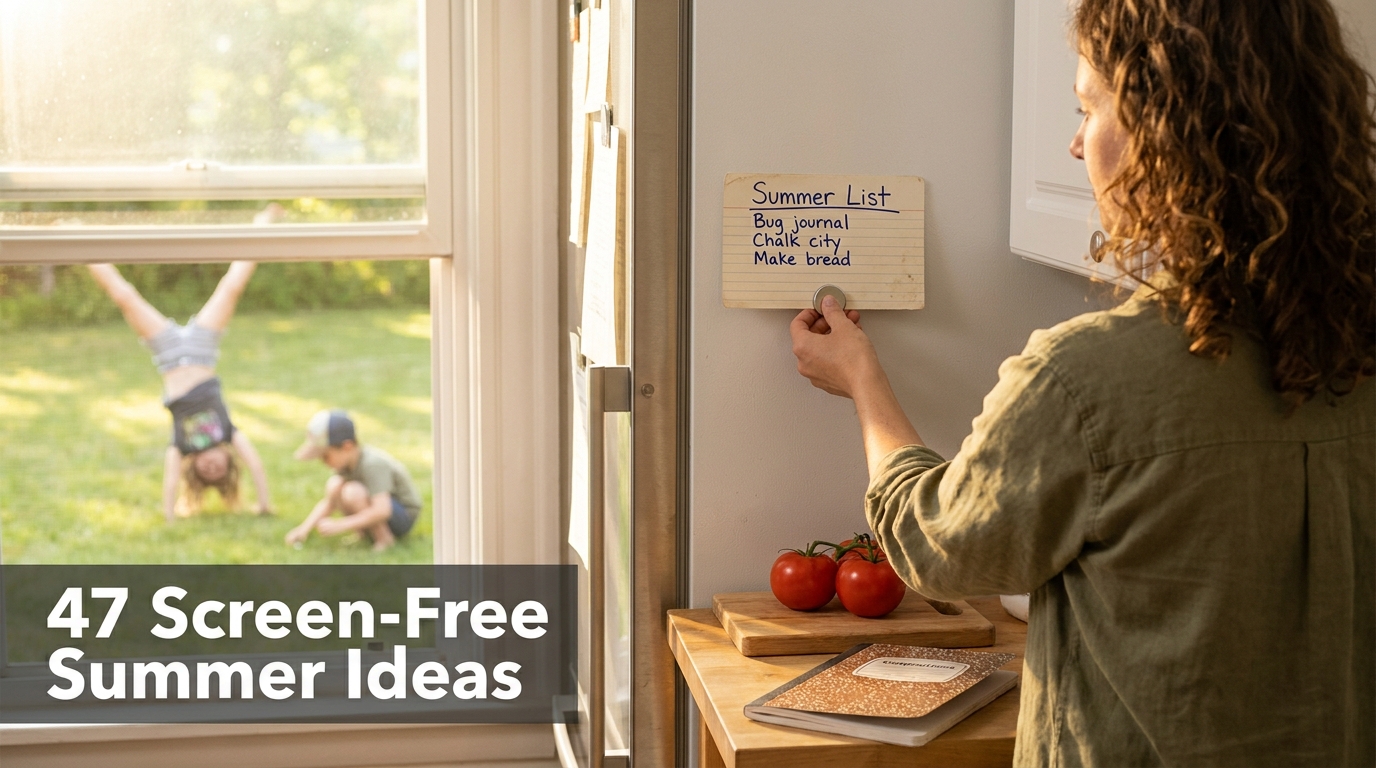

My youngest spent the first four days of last summer asking to watch
“just one more episode.” By day five, I’d taped a handwritten list to the fridge.
By week three, she’d stopped asking about the tablet entirely — not because I’d banned it,
but because she was too busy building a cardboard city in the backyard.
That list evolved over the summer into something I kept adding to every time something worked,
and crossing out every time it flopped. What follows is the real version — what held attention,
what fell flat, and what surprised me the most.
The Outdoor Bucket (Ideas That Survive Heat, Mud, and Boredom)
Backyard scavenger hunts with a twist work because the kid writes the list,
not you. Hand them an index card and a pencil the night before and tell them to list 10 things
they want to find outside tomorrow.
Sidewalk chalk cities outlast a single afternoon if you build rules around them.
Ours had streets, a post office, and a “no adults allowed” zone.
Bug journaling is something I stumbled onto after my son found a caterpillar
on the front porch. We grabbed a composition notebook and started drawing and describing every
insect we found.
Garden watering responsibility — giving a child a specific plant that is “theirs”
and only theirs to water — is different from asking them to help with the garden.
Water balloon target practice with a hula hoop hung from a fence takes about
10 minutes to set up and has a surprisingly long attention span.
Nature color matching — cut paint swatches from a hardware store and challenge
kids to find something in the yard that matches each shade.
Backyard camping (one night only) is the version that actually works for most families.
Creative Projects That Hold Attention Past the First 10 Minutes
Most craft ideas die after the first session because there’s no continuation built in.
The ones that lasted in our house had an evolving component.
A summer comic strip series worked better than I expected.
I set up a stapled blank booklet for each kid and said it had to be a series, not a standalone.
Salt dough mapping — making a relief map of your neighborhood, backyard,
or an imaginary place — takes two sittings.
Upcycled cardboard architecture with real constraints:
give them a pile of cardboard boxes and the rule that it has to be something
a small toy can live in.
Tie-dye with a pattern challenge gives kids ownership of the outcome
by teaching them specific techniques.
Pressed flower bookmarks are a two-week project that creates
excitement twice — once when collecting flowers and again when finishing the bookmarks.
Cooking and Kitchen Projects That Teach Actual Skills
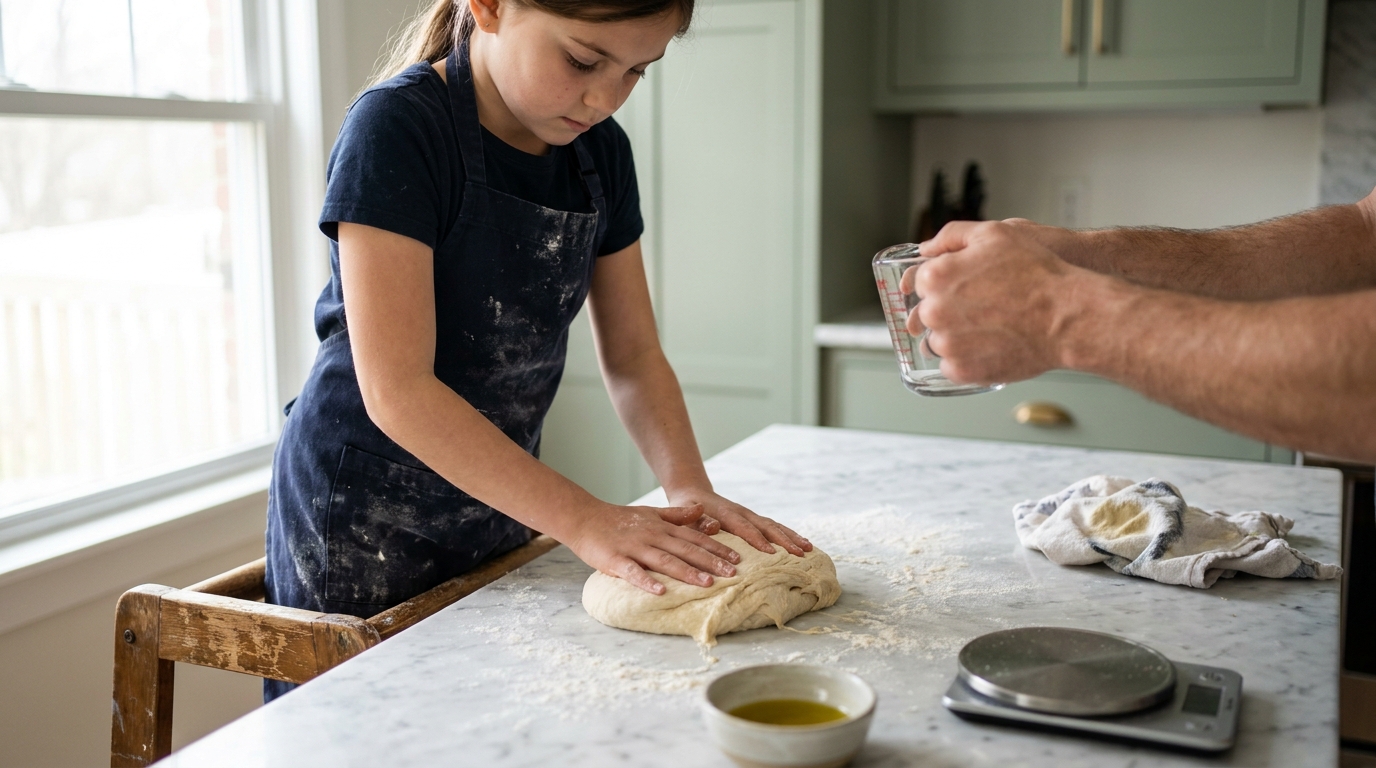
Homemade pizza from scratch teaches measuring, kneading,
patience, and assembly.
Fruit popsicles with real fruit are simple to make and become
a lesson in anticipation and waiting.
Bread-making as a morning project turns lunch into a reward.
A “market stall” cooking game where kids invent dishes from random ingredients
teaches creativity and improvisation.
Jam-making in small batches gives kids something tangible
to show for the summer.
Reading Ideas for Kids Who “Don’t Like Reading”
Kids who say they don’t like reading usually mean they don’t like being assigned reading.
A book swap with a neighbor kid creates social motivation to read.
Read-aloud chapters at night help kids follow longer,
more complex stories without reading fatigue.
A personal book log with ratings shifts reading from obligation to opinion.
Library “blind date with a book” adds mystery and excitement to choosing books.
Building a reading fort changes the reading environment enough
to make reading feel special.
When Nothing Is Working: The Emergency Activities List
Sidewalk obstacle courses take minutes to create and are endlessly replayable.
Post office game — writing and mailing real letters —
creates long-term engagement while waiting for replies.
Ice excavation keeps kids surprisingly focused using only frozen toys,
warm water, and simple tools.
Card game marathons build momentum when kids begin teaching each other.
What Actually Didn’t Work
Pre-packaged craft kits were disappointing because they removed
creative decision-making.
Unstructured free time often failed without a simple starting prompt.

Elaborate scavenger hunts designed by adults got less engagement
than messy kid-designed ones.
A Loose Framework for Planning the Weeks
Rather than scheduling activities hour by hour, a loose category rotation across the week
reduced boredom significantly.
One outdoor project, one creative project, one kitchen project,
and one reading goal per week was enough structure without becoming overwhelming.
What surprised me most was how often the simple things outlasted the elaborate ones.
The bug journal cost nothing. The cardboard city cost nothing.
The best afternoon of last summer was 90 minutes of my daughter teaching herself
cartwheels on the lawn.