
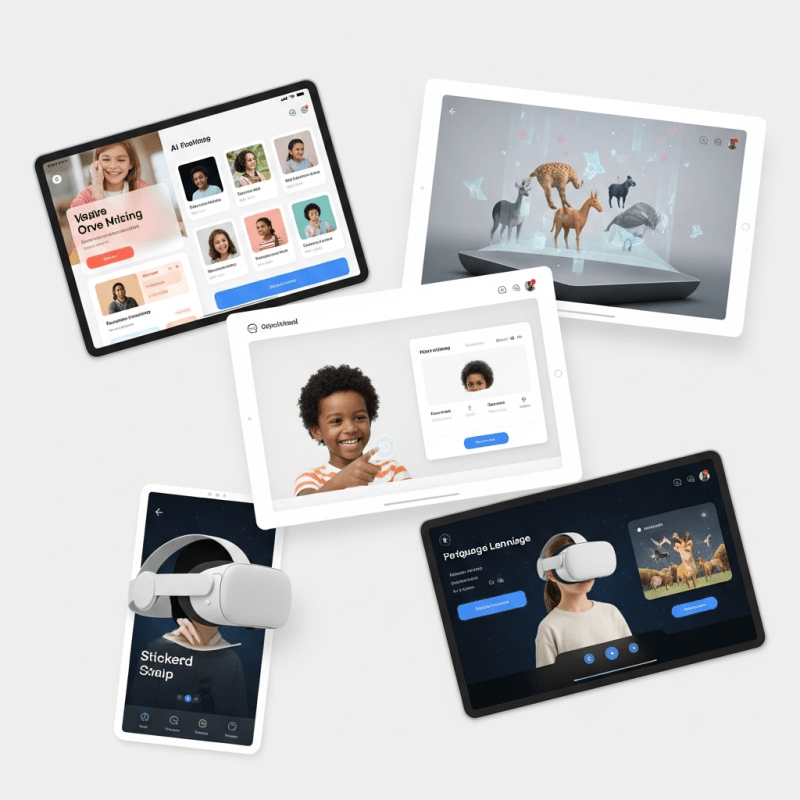


Every child processes information differently. Some children learn best visually, while others prefer listening, movement, repetition, or hands-on exploration. Traditional classrooms sometimes struggle to meet every learning style at once. AI-assisted learning platforms help bridge this gap through adaptive teaching methods.
Visual Learners
Visual learners benefit from:
- Animations
- Infographics
- Interactive diagrams
- Educational videos
- Visual storytelling
AI systems can automatically adjust lessons to include more visual explanations when needed.
Auditory Learners
Some children understand concepts more effectively by hearing information aloud. AI tools support auditory learning through:
- Read-aloud features
- Voice conversations
- Pronunciation coaching
- Audio storytelling
- Music-based lessons
This creates more accessible education experiences.
Kinesthetic Learners
Children who learn best through movement can engage with:
- Interactive activities
- Educational games
- Physical challenges
- Movement-based learning prompts
- Hands-on STEM projects
Many educational AI programs now promote offline interaction as part of lessons.
The Psychological Impact of Better Learning Experiences
Children often become frustrated when learning feels difficult or repetitive. AI personalization can reduce this frustration by matching lessons to the child’s pace.
Emotional Benefits
Benefit, Impact
- Confidence, Increased
- Motivation, Higher
- Anxiety, Reduced
- Curiosity, Encouraged
- Independence, Strengthened
Children who feel successful are more likely to keep learning.
Why Modern Parents Want Smarter Technology
Parents today grew up as smartphones and social media rose. Many experienced the downsides of uncontrolled digital habits firsthand. As a result, families now look for technology that:
- Encourages learning
- Promotes healthy habits
- Builds creativity
- Supports emotional growth
- Develops useful skills
This shift explains why educational AI is quickly replacing entertainment-focused screen use.
AI and Homework Support
Homework can create stress for both parents and children. Many parents struggle to explain modern educational methods after long workdays. AI tutoring systems now assist by:
- Explaining concepts step-by-step
- Offering practice questions
- Giving hints instead of direct answers
- Encouraging independent thinking
This reduces frustration while helping children build stronger study habits.
How AI Encourages Independent Learning
One of the most important educational goals is teaching children how to learn independently. AI platforms encourage self-directed learning by allowing children to:
- Choose subjects
- Explore interests
- Set goals
- Track progress
- Learn at their own pace
This builds lifelong learning habits.
The Rise of Family Learning Time
Many families now use AI educational tools together. Instead of isolated screen use, parents participate in:
- Reading challenges
- Educational quizzes
- Language practice
- Creative storytelling
- Science experiments
Technology becomes a shared experience rather than a solitary activity.
AI and Early Childhood Education
Preschool and kindergarten learning are changing quickly. Educational AI now helps younger children develop:
- Foundational skills
- Alphabet recognition
- Counting
- Shapes and colors
- Basic vocabulary
- Listening skills
- Emotional recognition
Interactive learning keeps young children engaged while supporting developmental milestones.
Balancing AI Learning With Traditional Childhood Activities
Experts emphasize that AI should support—not replace—real childhood experiences. Children still need:
- Outdoor play
- Social interaction
- Physical exercise
- Imaginative play
- Family bonding
- Real-world exploration
Healthy learning combines both digital and physical experiences.
Signs of Healthy AI Usage for Children
Parents often ask how to know if educational technology is being used appropriately.
Positive Signs
- Child discusses what they learned.
- Active engagement.
- Learning continues offline.
- Genuine curiosity.
- Balanced routines exist.
- Healthy moderation.
- Reading interest improves.
- Positive educational impact.
- Creativity increases.
Warning Signs of Excessive Technology Dependence
Even educational technology requires limits. Parents should watch for:
- Reduced physical activity
- Sleep problems
- Irritability
- Social withdrawal
- Loss of interest in offline activities
Healthy boundaries remain essential.
AI-Powered Learning for Children With Special Educational Needs
AI systems increasingly support accessibility. Children with learning differences may benefit from:
- Adjustable lesson pacing
- Speech-to-text tools
- Text-to-speech reading
- Simplified explanations
- Visual learning aids
- Repetition support
Personalization can make education more inclusive.
Why Educational AI Appeals to Busy Families
Modern family schedules are often demanding. Parents balance:
- Work
- Household responsibilities
- School activities
- Transportation
- Family commitments
AI-assisted learning provides flexible support available anytime. Children can learn:
- After school
- During travel
- On weekends
- During short learning sessions
This flexibility fits modern lifestyles.
The Role of AI in Homeschooling
Homeschooling continues to grow worldwide. AI educational platforms help homeschooling families by:
- Organizing lessons
- Tracking progress
- Suggesting activities
- Identifying learning gaps
- Supporting multiple subjects
Parents gain additional educational support without losing control of learning decisions.
AI and Critical Thinking Skills
One concern about technology is whether children simply memorize answers. Quality AI learning platforms instead encourage:
- Problem-solving
- Analysis
- Creativity
- Questioning
- Experimentation
Critical thinking remains one of the most valuable skills for the future.
Educational AI Around the World
Countries globally are investing heavily in AI-assisted education.
Global Trends in 2026
Region, Educational Focus
- North America, Personalized learning
- Europe, Digital literacy
- Asia, STEM advancement
- Middle East, Smart education initiatives
- Africa, Accessible mobile learning
Educational innovation continues expanding internationally.
AI and the Future Workforce
Many future careers will require technological understanding. Children learning with AI today may become tomorrow’s:
- Engineers
- Designers
- Researchers
- Entrepreneurs
- Scientists
- Digital creators
Learning how to work alongside technology is becoming increasingly valuable.
How AI Can Inspire a Love of Reading
One major challenge for parents is encouraging consistent reading habits. AI reading tools help by recommending books based on:
- Interests
- Reading level
- Favorite topics
- Learning goals
Children who feel connected to stories are more likely to become lifelong readers.
The Importance of Human Connection
Despite technological advances, children still need strong human relationships. AI cannot replace:
- Parental love
- Teacher encouragement
- Friendships
- Emotional support
- Family traditions
Technology works best when combined with strong human interaction.
Practical Daily AI Learning Routine for Families
Here is an example balanced routine families can use:
- 15 min AI reading practice
- 20 min outdoor activity
- 20 min physical book reading
- 15 min educational game
- Family time
- Discussion and reflection
Balance creates sustainable habits.
Top Features Parents Should Look For in Educational AI Tools
Before choosing any educational platform, parents should evaluate:
- Safety Features: Child-safe environment, ad-free experiences, strong privacy settings, parent dashboards
- Educational Features: Adaptive learning, progress tracking, curriculum alignment, skill-building activities
- Engagement Features: Interactive design, positive reinforcement, creativity tools, gamification elements
Quality matters more than quantity.
Why Educational AI Is Becoming Mainstream
Several factors contribute to rapid growth:
- Faster Internet Access: More families have reliable digital access.
- Improved AI Technology: Modern AI systems understand language and learning patterns more effectively.
- Growing Educational Demands: Parents seek additional learning support outside school hours.
- Increased Awareness: Families increasingly recognize the importance of future-ready skills.
Final Thoughts
The future of childhood learning is evolving quickly. Parents are moving beyond the old debate of “screens versus no screens.” Instead, they are asking a more meaningful question: “How can technology help children grow, learn, and thrive?” AI-assisted learning offers a powerful answer when used responsibly. The most successful educational environments combine:
- Human guidance
- Creativity
- Physical activity
- Reading
- Emotional support
- Smart technology
In 2026, families will discover that technology does not have to distract children from learning. When used intentionally, it can inspire curiosity, build confidence, and unlock educational opportunities that were once impossible.


